
Complete Guide to Shop Reinstatement Singapore for Retail Tenants (2026)
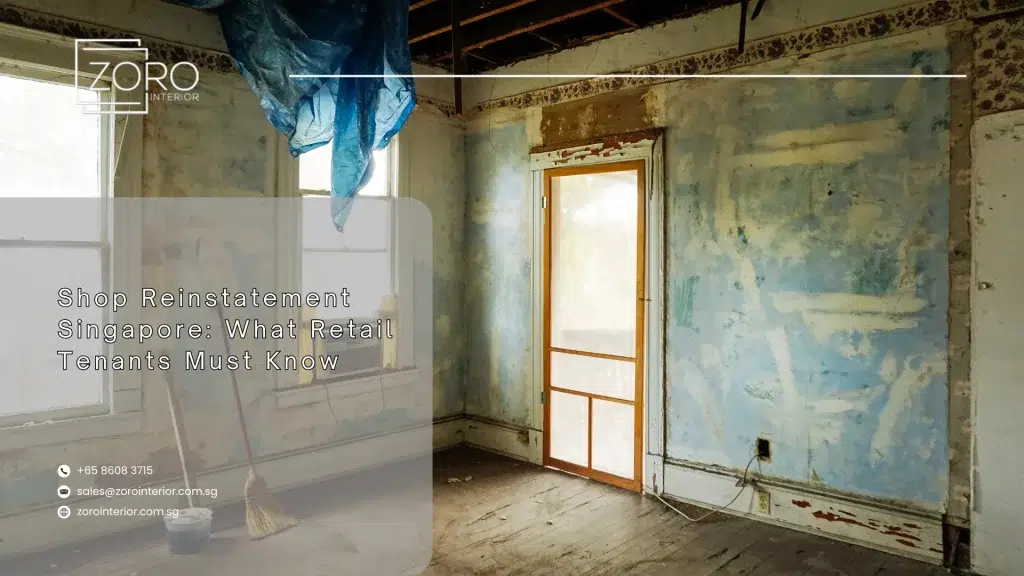
In Singapore, ending a shop lease is not just about moving items out of the unit. Tenants are also required to restore the shop to its original condition in accordance with the lease agreement—a process known as shop reinstatement. Without proper planning, reinstatement costs can increase significantly, project timelines may be delayed, and tenants may even face penalties from the landlord. Therefore, understanding the reinstatement process thoroughly is an essential step to protect your business from unnecessary losses. In this article, Zoro Interior provides a practical and comprehensive guide to shop reinstatement, covering the scope of work and key considerations that retail tenants need to understand. With the right knowledge and preparation, you can reduce the risk of landlord penalties and ensure the reinstatement process runs smoothly and efficiently.
What Is Shop Reinstatement Singapore for Retail Tenants?
Shop reinstatement is the process of restoring a retail unit to its original condition, as it was when first handed over by the landlord. This process must follow the terms stated in the lease agreement and is typically carried out when the lease period is ending or when a tenant decides to relocate to another location. The main purpose of reinstatement is to ensure that the unit is returned in an agreed condition, allowing the landlord to lease the space to the next tenant without delays or complications.
In practice, shop reinstatement involves more than simply clearing out the unit. Tenants are usually required to dismantle any additional installations made during the lease period, such as display racks, lighting systems, signage, as well as electrical or plumbing installations. Any elements that were not part of the original unit condition must generally be removed or restored accordingly. In addition, shop reinstatement in Singapore often follows specific standards set by the landlord or building management, especially for retail units located in shopping malls. Tenants are required to follow technical guidelines that cover approved materials, dismantling procedures, and workplace safety requirements during the reinstatement process. Failure to comply with these requirements may result in delays during the handover process and could lead to additional costs.
You may also refer to our related articles for further insights Reinstatement Services Singapore: Full Breakdown & How to Hire Right
Why Shop Reinstatement Is Required for Retail Tenants in Singapore ?
For retail tenants, any changes or renovations made during the lease period—such as space layout modifications, additional electrical installations, or lighting systems—must be dismantled at the end of the lease in accordance with the terms stated in the lease agreement. This responsibility lies entirely with the tenant, and failure to comply may result in the loss of the security deposit or additional charges imposed by the landlord.
From the landlord’s perspective, reinstatement is essential to maintain building standards and overall quality, while ensuring the unit remains safe and ready for the next tenant. Without proper reinstatement, the unit condition may differ from the original standard, making it more difficult to lease the space again and potentially leading to additional repair costs. In addition, reinstatement supports smooth tenant turnover, as landlords typically follow strict schedules to prepare units for new tenants. Delays in the reinstatement process can disrupt leasing timelines and lead to lost rental opportunities. Ultimately, reinstatement is not just about complying with rules, but also about protecting property assets by preventing long-term damage to the building structure and utility systems.
Retail Shop Reinstatement Scope in Singapore Based on Lease Requirements
The scope of work for retail shop reinstatement is typically defined clearly in the lease agreement and technical guidelines provided by the landlord or building management. Tenants are required to return the unit to its original condition according to the agreed specifications. Below are the common scopes of work involved in a retail shop reinstatement project in Singapore:
- Removal of interior elements and additional fixtures
- Restoration of electrical systems to their original condition
- Removal of additional plumbing systems and utilities
- Repair of walls, flooring, and ceiling finishes
- Final cleaning and waste management
- Final inspection and approval by the landlord
Estimated Shop Reinstatement Cost for Retail Units (2026 Guide)
Average Cost per Square Foot
Retail shop reinstatement costs in Singapore can vary depending on the unit size, the extent of previous renovations, and the requirements set by the landlord or building management. Reinstatement works typically include the dismantling of interior elements, restoration of utility systems, and final cleaning before the unit is handed back. In Singapore, reinstatement costs are generally calculated based on the total floor area of the unit. For retail units, the cost is usually higher than office units due to the presence of fixtures, signage, lighting systems, and more complex layouts. On average, the cost typically ranges as follows:
| Reinstatement Type | Reinstatement Cost | Scope of Work | Complexity Level |
|---|---|---|---|
| Simple Retail Reinstatement | SGD 10 – 15 Per Sqft | Basic dismantling, display removal, repainting, cleaning | Low |
| Standard Retail Reinstatement | SGD 15 – 25 Per Sqft | Partition dismantling, additional lighting removal, flooring removal | Medium |
| Complex Retail Reinstatement | SGD 25 – 40+ Per Sqft | Plumbing works, heavy fixture dismantling, complex installations | High |
Estimated cost by shop size
- Small retail shops (300–500 sqft) typically have simpler installations, such as lightweight display racks, basic lighting, and minimal additional partitions. Because of this, reinstatement costs are generally lower compared to larger units. The estimated reinstatement cost for small retail shops usually ranges from SGD 3,000 to SGD 12,500. Businesses that commonly fall into this category include small fashion retail stores, mall kiosks, accessory shops, and gadget stores
- Medium-sized retail shops (600–1,000 sqft) generally include more fixtures, partitions, and additional installations such as decorative lighting or storage areas. These added elements make reinstatement costs higher compared to smaller shops with sizes around 300–500 sqft. The estimated reinstatement cost for medium-sized retail shops typically ranges from SGD 6,000 to SGD 25,000. Retail businesses that commonly fall into this category include standard fashion retail stores, beauty and skincare shops, and electronics retail stores.
- Large retail shops (1,200–2,000 sqft) typically have more complex installations, including multiple partitions, built-in furniture, and extensive lighting systems. Due to this higher level of complexity, reinstatement costs in this category are generally more expensive than smaller and medium-sized units. The estimated reinstatement cost for large retail shops usually ranges from SGD 12,000 to SGD 50,000. Businesses that commonly fall into this category include supermarkets, lifestyle stores, and large fashion outlets
- Extra-large retail shops (above 2,000 sqft) typically require longer project timelines and a larger workforce to complete the reinstatement process. Units of this size often include complex additional installations, which can significantly increase overall reinstatement costs. The estimated reinstatement cost for extra-large retail units generally ranges from SGD 25,000 to SGD 75,000 or more, depending on the level of previous fit-out and technical requirements. Retail properties that commonly fall into this category include department stores, large specialty stores, and anchor retail stores.
Important Note: Reinstatement costs may vary depending on the complexity of the existing installations, the extent of previous renovations, and specific requirements set by the landlord or building management.
You may also refer to our related articles for further insights Reinstatement Cost in Singapore: Insurance Guide & Calculation
Hidden Costs Tenants Should Know
In addition to major costs such as dismantling and restoring the unit, tenants may also face hidden costs that are often overlooked during budgeting. These additional expenses usually arise due to building requirements, technical needs, or unexpected changes during the reinstatement process. Below are some of the most common hidden costs in retail shop reinstatement projects in Singapore:
- Work permit and building administration fees
Fees required by building management for work approval, renovation permits, and administrative processing. - Protection work costs
Expenses for protective materials such as floor coverings, hoarding, or lift protection to prevent damage to common areas during reinstatement works. - Waste disposal costs
Charges for removing and disposing of dismantled materials, especially bulky fixtures or regulated waste. - Overtime labor costs
Additional costs incurred when work must be carried out outside standard working hours, particularly in malls with restricted work schedules. - Rectification costs after inspection
Expenses required to fix defects or incomplete works identified during the landlord’s final inspection. - Technical certification fees
Costs for required inspections or certifications, such as electrical or fire safety compliance, depending on building requirements. - Late completion penalties
Fines imposed if the reinstatement is not completed within the timeline specified in the lease agreement.
- Special finishing restoration costs
Additional costs to restore specific finishes required by the landlord, such as flooring, wall finishes, or ceiling treatments.
Factors Affecting Reinstatement Cost
Shop reinstatement costs in Singapore are influenced by various factors, which is why the total cost can vary from one project to another. While the unit size is one of the main factors affecting reinstatement costs, there are several other elements that can directly impact the overall budget. By understanding these factors, tenants can estimate their reinstatement budget more accurately and avoid unexpected expenses during the project.
Below are the key factors that commonly affect shop reinstatement costs:
- Unit size and layout complexity
- Extent of previous renovation
- Landlord and building management requirements
- Type of retail business and fixtures used
- Condition of the unit and additional repair needs
- Project timeline and working hour restrictions
- Waste volume and type of materials removed
These seven factors play a significant role in determining the overall cost of your shop reinstatement project. By understanding them, tenants can plan their budget more realistically and manage their project timeline more effectively, ensuring a smoother and more efficient reinstatement process.
Step-by-Step Shop Reinstatement Process for Retail Tenants
Carrying out a retail shop reinstatement in Singapore malls is not simply about dismantling old interiors. It also involves technical planning, coordination with building management, and final inspections before the unit is handed back to the landlord. Below are the main stages involved in the retail shop reinstatement process in Singapore:
- Review the Lease Agreement and Landlord Requirements
The first step is to carefully review the lease agreement in detail. This document outlines the required condition in which the unit must be returned by the tenant. Key aspects to review at this stage include the original condition of the unit when it was first handed over, the scope of reinstatement works required, the finishing standards that must be met, the project completion timeline, and the inspection procedures as well as late completion penalties.
- Conduct an Initial Site Inspection
After understanding the landlord’s requirements, the next step is to conduct an initial site inspection. The purpose of this stage is to assess the current condition of the unit and determine what work needs to be carried out. During this stage, it is important to document the current condition of the unit, identify installations that need to be dismantled, carefully assess the condition of the walls, flooring, and ceiling, and inspect the electrical and plumbing systems.
- Prepare the Scope of Work and Cost Estimation
Based on the inspection results, the contractor will prepare a scope of work that outlines the detailed reinstatement tasks to be carried out. The work typically includes dismantling partitions and fixtures, removing signage and additional installations, restoring electrical and utility systems to their original condition, as well as performing basic finishing repairs and final cleaning. - Submit Work Permit Applications to Building Management
Before starting any reinstatement work, tenants are required to submit a work permit application to the building or mall management. The documents typically required for submission include the reinstatement work plan, project schedule, protection methods for common areas, and contractor insurance documents, if required. - Carry Out Protection Work for Common Areas
Before dismantling work begins, the contractor must install protective measures in common areas to prevent damage to building facilities. This protection work typically includes corridor floor protection, protection for lifts and common walls, installation of temporary hoarding, and protection of public access areas.This stage is essential to avoid additional costs that may arise from damage to public areas during the reinstatement process. - Carry Out Dismantling Works
This stage is the core phase of the reinstatement process. During this stage, all interior elements and additional installations created by the tenant are dismantled. The work typically includes removal of additional partitions, dismantling of display racks and built-in furniture, removal of signage and decorative lighting, elimination of additional electrical installations, and dismantling of supplementary plumbing systems. This process must be carried out carefully to avoid damaging the main building structure.
- Restore the Unit to Its Original Condition
After the dismantling works are completed, the next step is to restore the unit to its original condition in accordance with the standards stated in the lease agreement. The work carried out at this stage typically includes repairing walls, flooring, and ceilings, restoring electrical installations to their original condition, sealing holes or marks left from previous installations, and leveling floor or wall surfaces. This stage is performed to ensure that the unit is ready for inspection by the landlord.
- Final Cleaning and Waste Disposal
After all works are completed, a final cleaning is carried out to ensure the unit is in a clean condition before inspection. The activities at this stage include transportation of construction waste, disposal of materials at approved facilities, cleaning of dust and remaining materials, and a final inspection of the unit condition.
- Final Inspection by the Landlord
The final stage is the inspection conducted by the landlord or building management. At this stage, the landlord will check whether the unit has been restored according to the required standards. If any non-compliance is identified, the tenant may be required to carry out additional rectification works, redo certain tasks, or correct finishes that do not meet the specified requirements.
Mall vs Shophouse Reinstatement Differences
| Comparison Aspect | Reinstatement in Mall Units | Reinstatement in Shophouse Units |
|---|---|---|
| Permit Requirements | Typically has stricter permit requirements from mall management. Tenants must submit documents such as work permits, method statements, work schedules, and contractor insurance. | Permit requirements are generally simpler and usually require approval only from the landlord, unless the building is located in a conservation area. |
| Working Hours | Working hours are usually restricted and often allowed only outside mall operating hours, such as at night or during weekends. | Working hours are more flexible and can typically be carried out during normal daytime hours. |
| Protection Work Requirements | Protection work for common areas is mandatory including corridor floor protection, lift and wall protection, and temporary hoarding installation. These costs can be significant. | Protection work is usually minimal because there are fewer public areas that require protection. |
| System Complexity | Electrical, HVAC, and plumbing systems are usually more complex, requiring additional technical expertise and longer project durations. | Utility systems are generally simpler, making reinstatement faster and more cost-efficient. |
| Reinstatement Cost | Generally higher due to additional fees such as permits, supervision costs, protection works, and possible overtime charges. | Usually lower due to fewer administrative requirements and simpler technical work. |
| Project Supervision | Project supervision is typically stricter, with regular monitoring by mall management throughout the project. | Supervision is usually handled directly by the landlord with simpler procedures. |
| Final Inspection Process | Final inspections are typically more detailed and must meet strict mall standards before handover. | Final inspections are usually simpler and depend mainly on landlord approval. |
| Risk of Additional Costs | Higher risk of unexpected costs due to strict regulations, restricted working hours, and additional management requirements. | Lower risk of additional costs, except in cases involving major repairs or special landlord requirements. |
Important Note : Although reinstatement in mall units is generally more complex and costly than in shophouse units, the final cost still depends on several factors such as unit size, previous renovation scope, type of retail business and the current condition of the unit
How to Choose a Shop Reinstatement Contractor in Singapore
Choosing a reinstatement contractor in Singapore is an important step to ensure the project runs smoothly, stays on schedule, and meets landlord requirements. The right contractor will help complete dismantling works and restore the unit properly. Therefore, tenants should consider several key factors before selecting a contractor, such as:
- Choose a contractor with specific experience in reinstatement projects
- Check the contractor’s legal documents and certifications
- Ensure the contractor conducts a site inspection before providing a quotation
- Request a clear and detailed scope of work
- Compare several quotations before making a decision
- Review previous project portfolios
- Look for client reviews or testimonials
- Ensure the contractor understands building management requirements
- Choose a contractor with strong project management skills
- Avoid choosing a contractor based solely on the lowest price
Additional Tip: It is highly recommended to appoint a contractor early before the lease period ends. This allows sufficient time for planning, permit submission, and project execution without rushing. Proper planning and selecting the right contractor can help reduce the risk of delays and unexpected costs during the reinstatement process. If you are planning a retail shop reinstatement project in Singapore and require professional guidance, working with an experienced team such as Zoro Interior can help ensure the process runs more efficiently, from the initial site inspection to the completion of works in accordance with landlord and building management requirements.
You may also refer to our related articles for further insights How to Choose the Best Office Reinstatement Contractor Singapore Guide
Common Shop Reinstatement Mistakes Retail Tenants Make
Retail shop reinstatement in Singapore often encounters challenges due to a lack of understanding of the required procedures and landlord requirements. Small mistakes made at the early stage can lead to project delays, resulting in additional costs and even the loss of security deposits. Below are some of the most common mistakes frequently made by tenants during retail shop reinstatement projects in Singapore:
- Not reading the lease agreement in detail
- Delaying reinstatement planning for too long
- Choosing a contractor based only on the lowest price
- Not conducting an initial site inspection
- Ignoring building management requirements
- Overlooking hidden costs involved in the project
- Failing to set a proper reinstatement project timeline
- Not preparing documentation of the unit’s original condition
These common mistakes in reinstatement projects usually occur due to a lack of understanding of the lease agreement, poor planning, and selecting the wrong contractor
You may also refer to our related articles for further insights Reinstatement Works Singapore 2026: Smart Tips to Get the Best Price Without Risk
Shop Reinstatement Timeline Before Lease Ends
The reinstatement timeline should ideally be planned 3 to 6 months before the lease expiry. Proper planning helps ensure that all works are completed on time and in accordance with the landlord’s requirements.
| Time Before Lease Expiry | Key Stage | Activities Involved | Main Objective |
|---|---|---|---|
| 6 Months Before | Initial Planning | Review the lease agreement in detail Understand landlord reinstatement requirements Collect documentation of the unit’s original condition Start searching for an experienced reinstatement contractor |
To understand tenant obligations and prepare the project early |
| 4–5 Months Before | Site Inspection & Quotation | Conduct site inspection with the contractor Identify required dismantling and restoration works Prepare a clear scope of work Request and compare multiple quotations Select a suitable contractor |
To determine accurate project scope and cost estimation |
| 2–3 Months Before | Permit Submission & Approval | Submit reinstatement proposal to landlord Provide work schedule and method statement Apply for work permits from building management Arrange contractor insurance if required |
To obtain official approval before starting work |
| 1–2 Months Before | Reinstatement Execution | Carry out protection work for common areas Dismantle partitions and additional installations Remove signage and built-in furniture Repair walls, flooring and ceiling Restore utilities to original condition |
To return the unit to its original lease condition |
| 2–3 Weeks Before | Cleaning & Inspection Preparation | Perform final cleaning of the unit Dispose of construction waste Conduct internal quality checks Ensure finishing meets required standards |
To prepare the unit for landlord inspection |
| 1 Week Before | Final Inspection | Arrange final inspection with landlord Carry out minor rectifications if required Handover the unit |
To obtain final approval and avoid deposit deductions |
Important Notes for tenant:
- It is highly recommended to start reinstatement planning at least 3–6 months before lease expiry.
- For retail units in large shopping malls in Singapore, approval processes may take 2–4 weeks, so early preparation is essential.
- Always allocate an additional 1–2 weeks buffer time for rectification works after inspection.
Conclusion Planning Your Shop Reinstatement the Right Way
Shop reinstatement is an essential responsibility for retail tenants in Singapore when approaching the end of a lease period. As outlined in this guide, the reinstatement process involves more than simple dismantling work—it requires proper planning, understanding of lease requirements, coordination with building management, and careful execution to meet landlord standards. Without adequate preparation, tenants may face unexpected costs, project delays, or even the risk of losing their security deposit.
By understanding the scope of reinstatement work, estimating costs realistically, identifying potential hidden expenses, and following a structured timeline, tenants can manage their reinstatement projects more efficiently. Choosing an experienced contractor and starting preparations at least 3 to 6 months before lease expiry are among the most important steps to ensure the project runs smoothly and meets all required conditions.
If you are preparing for a retail shop reinstatement in Singapore and want to ensure a smooth and compliant process, working with an experienced reinstatement team can make a significant difference. Zoro Interior provides professional shop reinstatement services in Singapore, supporting retail tenants from initial site inspection and permit submission to final handover in accordance with landlord and building management requirements. Reaching out early allows you to plan your project with confidence and avoid unnecessary delays or unexpected costs.
FAQ
What is shop reinstatement in Singapore?
Shop reinstatement in Singapore is the process of restoring a retail unit to its original condition before handing it back to the landlord at the end of the lease. This usually involves dismantling tenant-installed fixtures, removing signage and partitions, restoring electrical and plumbing systems, repairing surfaces, and completing final cleaning before inspection.
Is shop reinstatement mandatory for retail tenants in Singapore?
Yes, shop reinstatement is typically mandatory for retail tenants in Singapore. Most lease agreements clearly state that tenants must return the unit to its original condition. Failure to complete reinstatement properly may result in penalties, additional charges, or loss of the security deposit.
How much does shop reinstatement cost in Singapore?
Shop reinstatement costs in Singapore generally range between:
- SGD 10–15 per sqft — Basic reinstatement
- SGD 15–25 per sqft — Standard reinstatement
- SGD 25–40+ per sqft — Complex reinstatement
The final cost depends on factors such as unit size, previous renovations, landlord requirements, and technical complexity.
What factors affect shop reinstatement costs in Singapore?
Several key factors influence reinstatement costs, including:
- Unit size and layout complexity
- Extent of previous renovations
- Type of retail business fixtures
- Landlord and building management requirements
- Condition of the unit
- Working hour restrictions
- Waste disposal requirements
Understanding these factors helps tenants estimate costs more accurately.
When should I start planning shop reinstatement?
It is recommended to start planning shop reinstatement 3 to 6 months before lease expiry. Early planning allows sufficient time for site inspections, quotation comparison, permit submission, and project execution without rushing.
How long does shop reinstatement take in Singapore?
The duration of shop reinstatement typically ranges from:
- 2 to 4 weeks for small retail units
- 4 to 6 weeks for medium-sized shops
- 6 to 10 weeks for large or complex retail units
Mall units may require longer timelines due to stricter permit approvals and restricted working hours.
What is included in shop reinstatement works?
Typical shop reinstatement works include:
- Removal of partitions and fixtures
- Dismantling signage and lighting
- Electrical and plumbing restoration
- Wall, ceiling, and floor repairs
- Waste disposal
- Final cleaning
- Landlord inspection preparation
The exact scope depends on lease requirements
What are hidden costs in shop reinstatement projects?
Common hidden costs include:
- Work permit and administrative fees
- Protection work for common areas
- Waste disposal charges
- Overtime labor costs
- Rectification after inspection
- Technical certification fees
- Late completion penalties
Planning for these costs helps avoid budget overruns.
What is the difference between mall and shophouse reinstatement?
Mall reinstatement projects usually:
- Require stricter permits
- Have restricted working hours
- Need protection work for public areas
- Cost more overall
Shophouse reinstatement projects are generally:
- More flexible
- Faster to complete
- Lower in administrative complexity
- More cost-efficient
How do I choose a shop reinstatement contractor in Singapore?
When choosing a reinstatement contractor, tenants should:
- Select contractors with reinstatement experience
- Check licenses and insurance
- Request detailed scope of work
- Compare multiple quotations
- Review previous project portfolios
- Ensure familiarity with building management rules
Choosing the right contractor helps reduce delays and unexpected costs.
Receive Your FREE Quotation Today!
What You Get When You Pick Zoro Interior for
Your Commercial and Office Interior Design Project
- Quality workmanship without breaking the bank.
- Quick and hassle-free F&B renovation so you can focus on the important things while we work.
- Professional and personalised solutions for all your F&B renovation needs.
- Complete transparency from start to end - no hidden costs, no gimmicks.
Fill in this form now and get your free quote!