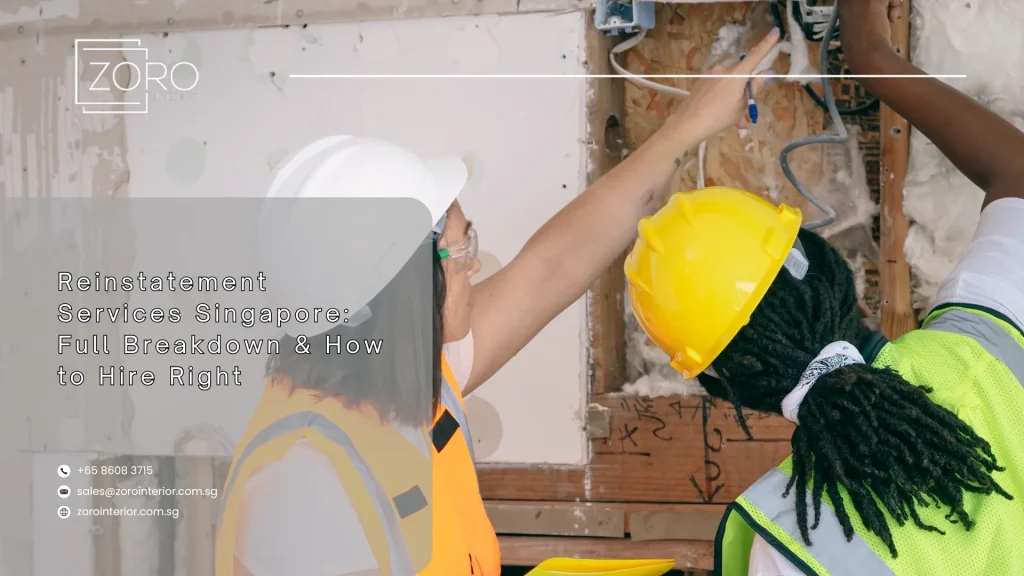
Reinstatement Services Singapore: Full Breakdown & How to Hire Right
Reinstatement services Singaporeare an essential part of the business lifecycle, especially when tenants are ending their lease or relocating their operations. Restoring a property to its original condition, as stated in the tenancy agreement, is a legal obligation that must be fulfilled to avoid penalties or deposit deductions. The reinstatement process typically includes dismantling partitions, repairing floors and ceilings, electrical (M&E) works, repainting, and final cleaning. As it involves both technical requirements and building regulations, it is crucial to engage an experienced reinstatement contractor.
In this article, Zoro Interior will discuss what reinstatement is, the scope of work involved, estimated reinstatement costs, and tips for choosing the right reinstatement services in Singapore to ensure a smooth and timely handover.
Taking out fixtures, built-in furniture, and other installations added during the tenancy
In most commercial lease agreements in Singapore, there is a reinstatement clause requiring tenants to return the property to its original condition upon lease expiry. If this obligation is not fulfilled or the work does not meet building standards, the landlord has the right to:
Deduct costs from the security deposit to cover reinstatement works
Appoint their own contractor and charge the tenant accordingly
Take legal action if the losses or costs exceed the security deposit
Understanding reinstatement obligations from the outset is essential to avoid penalties, additional expenses, and potential legal disputes.
Common Misconceptions About Reinstatement
Many tenants assume that reinstatement only involves repainting and cleaning the unit. In reality, it may include dismantling partitions, ceilings, raised flooring, electrical installations, air-conditioning systems, and plumbing works, which often require professional contractors to meet building regulations.
Some believe that if renovations were paid for out of their own budget, they do not need to remove them at the end of the lease. However, almost all alterations must be restored to the original condition unless there is written approval from the landlord.
There is also an assumption that the security deposit will be fully refunded as long as there is no major damage. In fact, if reinstatement is not completed according to the lease agreement, the landlord has the right to deduct the necessary costs or appoint their own contractor at the tenant’s expense.
Many tenants delay reinstatement preparation until the lease is about to expire. However, the process requires time for building management approval, work permits, and technical coordination. Delays may lead to penalties or even automatic lease extensions.
What’s Typically Included in Reinstatement Works
Demolition and Hacking
In the reinstatement services process in Singapore, the initial stage typically involves dismantling built-in furniture, partition walls, and suspended ceilings. This work may include hacking floor tiles, removing raised flooring systems, and tearing down drywall or other room dividers. The demolition and hacking phase is a crucial part of office reinstatement, retail reinstatement, and F&B reinstatement projects, as it aims to restore the unit to its original bare condition in accordance with the commercial lease agreement and building management requirements.
Electrical and Mechanical Removal
The dismantling of electrical and mechanical installations (M&E works) is a critical stage that must be carried out with great care. Additional power points, lighting systems, air-conditioning units, electrical panels, and plumbing fixtures often need to be safely removed in accordance with building standards. This work is typically handled by certified professionals and experienced reinstatement contractors to ensure compliance with safety regulations, building management requirements, and a smooth handover process—while minimizing the risk of hazards or penalties.
Partition and Ceiling Removal
In reinstatement works, the removal of partitions and ceilings is a crucial stage, whether for offices or other commercial spaces. Office cubicles, glass walls, additional meeting rooms, and suspended ceilings must be dismantled to restore the original open-plan layout (bare unit condition) as required by the landlord. This step ensures the unit complies with the reinstatement clause in the commercial lease agreement and facilitates a smooth final inspection before handover to the landlord or property management.
Painting and Final Touch-Ups
The final stage of the reinstatement works involves repainting the walls according to the building’s standard color (usually white), as well as patching any holes, cracks, or damages left behind from the dismantling process. This finishing stage is essential to ensure the unit is fully restored to its original condition in accordance with the commercial lease agreement. With a neat and professional finish, the final inspection and handover to the landlord or property management can proceed smoothly, minimizing the risk of deposit deductions.
To ensure that reinstatementworks are carried out professionally and in compliance with building standards, you can consult with theZoro Interior team for a site survey and a clear cost estimation.
Differences Between Office, Retail, and F&B Reinstatement
Office Reinstatement
Office reinstatement is generally simpler compared to other types. The work usually involves removing partitions, office cubicles, suspended ceilings, raised flooring systems, data cabling, and additional lighting installations. The main objective is to restore the space into an open-plan layout according to the building standards set by the Building and Construction Authority.
Retail Reinstatement
Retail reinstatement usually includes dismantling shop signage, glass stickers, display racks, and other branding elements. Some shopping malls have strict façade requirements, so the work must follow the property management guidelines of the mall.
F&B Reinstatement
F&B reinstatement is the most complex type because it involves dismantling commercial kitchen equipment, exhaust systems, grease traps, and specialized plumbing installations. Cleaning and disposal must comply with environmental standards regulated by National Environment Agency.
Aspect
Office Reinstatement
Retail Reinstatement
F&B Reinstatement
Complexity Level
Relatively Simple
Moderate
Most Complex
Demolition Works
Office partitions, ceilings, raised flooring, data cabling
Ventilation systems, water pipes, commercial cooking equipment
Regulatory Requirements
Building management standards
Mall façade and commercial area guidelines
Environmental and sanitation regulations
Completion Time
Usually faster
Moderate duration
Longer duration
Cost Range
Lowest
Medium
Highest
Main Focus
Restoring open-plan layout
Removing branding and display elements
Cleaning kitchen-related installations and ventilation systems
Technical Risk Level
Low
Medium
High (especially related to hygiene and ventilation compliance)
Overall, F&B reinstatement typically requires more time, labor, and cost compared to office and retail reinstatement.
What Affects the Cost of Reinstatement Services
Size and Complexity of the Space
Naturally, larger or more customized spaces require more extensive reinstatement works, which can significantly increase labour and material costs.
Landlord-Specific Fit-Out Requirements
Some landlords require reinstatement to precise specifications, including specific paint brands, wall finishes, or floor conditions—affecting both price and scope.
Working Hours and Access Restrictions
Restricted access (e.g., night-only works or no lift access) can increase costs due to overtime charges and logistical difficulties.
If you’re unsure, it’s worth comparing a few reinstatement quotation Singapore offers to understand what’s typically covered.
How to Choose the Right Contractor Reinstatement Services Singapore
Licensing, Insurance, and Certifications
Ensure the contractor is registered with BCA (Building and Construction Authority) and has relevant insurance coverage. For M&E works, confirm their electrical workers are licensed.
Portfolio of Completed Projects
Review similar past projects. A contractor experienced in reinstating retail shops may not be the best fit for an F&B outlet.
Familiarity with Building and Landlord Policies
Contractors who have worked in your building or with your landlord before will likely finish faster and with fewer compliance issues.
If you need professional reinstatement services, you may consider consulting Zoro Interiorfor site consultation and inspection.
Risks of Choosing the Wrong Reinstatement Services in Singapore
Lack of Written Quotation Breakdown
Avoid contractors who provide vague lump-sum quotations without itemized costs. This often leads to surprise charges later.
Lack of Trusted Reviews on the Website
Avoid contractors who do not have customer reviews on their official website or have limited project portfolios. Reliable reinstatement contractors usually have a good online reputation supported by positive customer testimonials.
Overpromising Tight Timelines
While fast turnaround may sound attractive, overly aggressive timelines may compromise quality or cause delays if corners are cut.
Tips for Comparing Multiple Quotes
Check for Line-Item Detail (Not Lump Sum)
Make sure each quotation breaks down costs clearly—demolition, electrical works, painting, disposal, etc.—so you can compare apples to apples.
Ask About Hidden Fees (e.g., debris disposal)
Some contractors exclude costs like debris removal or after-hours access—leading to higher final bills than expected.
Evaluate Payment Terms and Deposit Requirements
Professional firms typically request a reasonable deposit (e.g., 20–30%). Be cautious of those requesting full payment upfront.
Common Mistakes Tenants Make
Delaying the Reinstatement Planning Process
Leaving reinstatement to the last few weeks of your lease can result in rushed jobs, missed handover deadlines, and penalties.
Not Reading the Lease Exit Clauses Thoroughly
Always review your tenancy agreement months in advance to understand the exact reinstatement obligations and get necessary approvals early.
Assuming All Services Are “Standard” Across Contractors
Not all reinstatement packages are alike. Some include permit applications, while others don’t. Always clarify scope and responsibilities in writing.
The “3014 Bedok Industrial Park Reinstatement” project is one of the reinstatement projects covering an area of 3,200 sqft that we successfully completed within 11 days after receiving only one week’s notice from the client. Understanding the urgency of this project, we immediately mobilised our team and completed the work ahead of the planned schedule. As a result, the handover process could be carried out earlier, providing peace of mind for the client while helping to avoid unnecessary additional rental costs.
The scope of work we carried out was not limited to hacking and demolition works but also included custom fabrication for the reinstatement of old-model window louvre glass. In addition, we carefully reinstalled the doors and carried out repainting works to restore the unit to the required condition. Our detailed and well-planned approach ensured that the unit was returned in accordance with the specified standards.
If you would like to explore more of our completed projects, feel free to browse the other portfolios of Zoro Interiorto see how we help clients handle reinstatement projects with quality, efficiency, and professional execution tailored to their property needs.
Conclusion and Next Steps
Reinstatement services in Singaporeare an important step when ending a commercial lease, especially for businesses relocating or vacating their space. The process is not simply about cleaning or repainting, but involves technical demolition, electrical and mechanical removal, and compliance with building management regulations. Understanding lease obligations early, planning reinstatement works in advance, and choosing a professional contractor can help tenants avoid unnecessary costs, deposit deductions, and project delays.
Each type of space—office, retail, or F&B—has different reinstatement requirements in terms of complexity, timeline, and technical risk. Therefore, reviewing quotation details, verifying contractor credentials, and confirming scope of work are essential steps before starting the project. Proper preparation ensures a smoother handover process and protects your financial and operational interests when the lease ends.
If you are planning reinstatement works in Singapore, consider consultingZoro Interiorfor professional site inspection, transparent quotation breakdown, and customized reinstatement solutions tailored to your commercial space. Reach out today to discuss your project requirements and ensure a hassle-free reinstatement process.
FAQ
What is reinstatement service in Singapore?
Reinstatement service is the process of restoring a commercial space to its original condition according to the lease agreement. The work usually includes dismantling partitions, additional electrical installations, ceilings, and finishing works before the final handover to the landlord.
Is reinstatement mandatory when the lease ends?
Yes. Most commercial lease agreements in Singapore include a reinstatement clause requiring tenants to return the unit to its original condition. If this is not completed properly, the landlord may deduct costs from the security deposit or appoint their own contractor.
How long does reinstatement work take?
The duration depends on the size and complexity of the space. Office reinstatement is usually faster compared to F&B reinstatement because F&B units involve more mechanical, ventilation, and sanitation installations that must be removed in compliance with regulations set by National Environment Agency.
How much do reinstatement services cost in Singapore?
Reinstatement costs in Singapore vary depending on unit size, complexity, and landlord requirements. Office reinstatement generally costs less, while retail and F&B reinstatement are more expensive due to specialized installations such as signage removal, exhaust systems, and plumbing works.
How long does reinstatement take to complete?
The duration of reinstatement depends on the size of the unit and the complexity of the work. Small office reinstatement projects may take a few days, while retail and F&B reinstatement projects can take one to three weeks due to additional dismantling and compliance requirements.
What factors affect reinstatement service costs?
Several factors affect reinstatement costs, including the size of the space, complexity of installations, working hour restrictions, building access rules, and landlord-specific requirements. Night work or limited lift access may also increase labor and logistics costs.
What is the difference between office, retail, and F&B reinstatement?
Office reinstatement usually involves removing partitions and restoring open layouts. Retail reinstatement focuses on removing signage and branding elements. F&B reinstatement is the most complex because it includes dismantling kitchen equipment, grease traps, ventilation systems, and plumbing installations.
When should I start planning reinstatement works?
It is recommended to start planning reinstatement at least 2–3 months before lease expiry. Early planning allows sufficient time for contractor selection, building approvals, and permit applications, helping avoid penalties caused by delayed handover.
How do I choose the right reinstatement contractor in Singapore?
Choose a contractor with proper licensing, insurance coverage, and proven experience in similar projects. Review their portfolio, request itemized quotations, and confirm their familiarity with building management rules to ensure compliance and smooth project completion.
Receive Your FREE Quotation Today!
What You Get When You Pick Zoro Interior for Your Commercial and Office Interior Design Project
Quality workmanship without breaking the bank.
Quick and hassle-free F&B renovation so you can focus on the important things while we work.
Professional and personalised solutions for all your F&B renovation needs.
Complete transparency from start to end - no hidden costs, no gimmicks.